How Often Should You Wash Bath Mats? Cleaning, Washing & Drying Guide
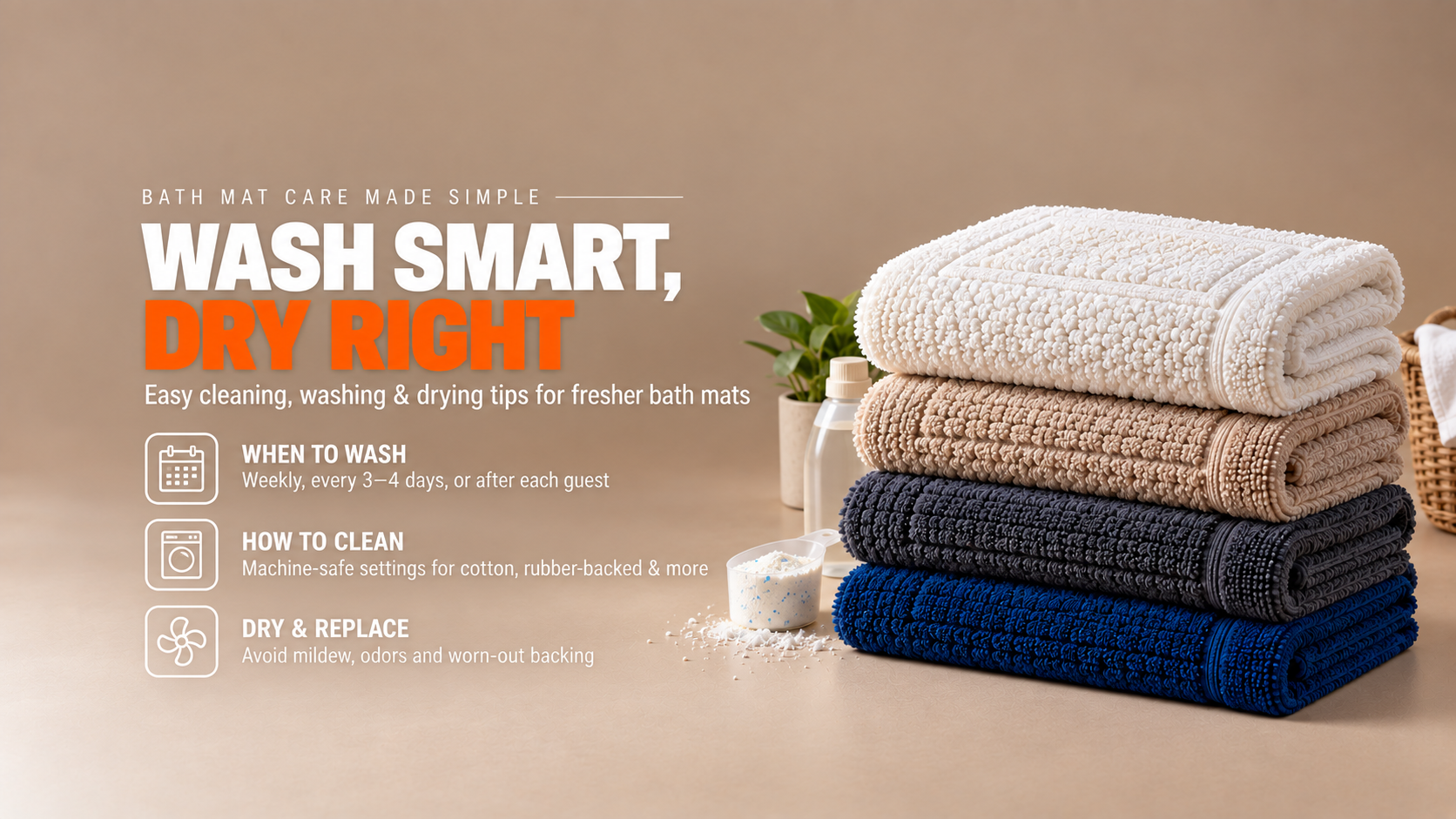
Once a week works for most bath mats. If the whole family shares one bathroom, there’s no fan, or the dog likes to nap on the mat, wash it every three or four days. Hotels, spas and vacation rentals change it after every guest.
Most of us are well behind that. According to a British survey reported by the University of Florida’s IFAS Extension, only about 1 in 4 people wash their bath mat weekly or more. Meanwhile it’s lying in the dampest room in the house, catching water, soap and whatever comes off your feet.
wHow Often Should You Wash Bath Mats and Bathroom Rugs?
When you’re deciding how often to clean your bath mats, the dirt you can see isn’t the best guide. What matters is how long the mat stays wet. One that’s dry again by lunchtime can go a full week between washes, but one that’s still damp at dinner can’t.
| Where the mat is | How often to wash it |
| Bathroom used by one or two people, with a fan or window | Once a week |
| Shared family bathroom with daily showers | Every 3 to 4 days |
| Kids or pets use the mat | Every 3 to 4 days, or when it’s visibly dirty |
| No ventilation, mat rarely dries | Every 3 to 4 days |
| Guest bathroom | After each visit |
| Vacation rental | After every stay |
| Hotel, spa or gym | After every guest or client |
Bathroom rugs by the sink or toilet don’t get soaked the way the shower mat does, so every two to four weeks is usually enough for them. Our post on bath rugs vs. bath mats explains the difference if you’re not sure which you have.
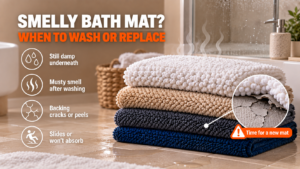
Some things mean the mat needs washing now, whatever the schedule says: a musty smell, a slippery feel underneath, or little dark specks on the backing. That’s mildew getting started. Between washes, throw the mat over the edge of the tub after your shower so the underside gets some air.
Can You Wash Bath Mats in the Washing Machine?
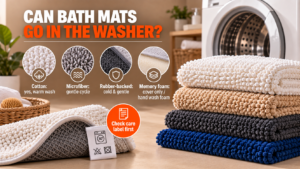
Yes, you can put bath mats in the washing machine. Cotton, microfiber and chenille mats all handle it fine. So do most rubber-backed mats and bathroom rugs, provided the label says so and the backing hasn’t started falling apart. Memory foam is the exception: only the cover goes in the machine.
If there’s no care label, or it’s too faded to read, these settings are a safe starting point:
| Material | Water | Cycle | Dryer | Bleach |
| Cotton terry, no backing | Warm or hot | Normal | Medium heat | White cotton only |
| Microfiber or chenille | Cool or warm | Gentle | Low heat, away from cotton towels | No |
| Rubber or latex backing | Cold or lukewarm | Gentle, low spin | No, air dry | No |
| Memory foam | Lukewarm, by hand | Removable cover only | No, air dry | No |
| Rubber tub mat with suction cups | Warm, by hand | Only if the label allows | No, air dry | No |
How to Wash Bath Mats in a Washing Machine
This method is for plain cloth mats with no backing, like the backless cotton bath mats hotels use.
- Shake the mat out outside, or vacuum both sides. Hair and grit left on it end up in the washer’s drain filter.
- For stains, rub in a little liquid detergent and leave it about 10 minutes.
- Put the mat in with two or three bath towels in similar colors. One heavy, wet mat alone can knock the drum off balance.
- Wash it warm or hot, as hot as the label allows, with your usual amount of detergent. Adding more doesn’t clean better. It just gets stuck in the thick pile.
- Leave out the fabric softener, which coats the loops so the mat soaks up less. To soften it, add half a cup of white vinegar to the rinse, but only if there’s no bleach in the load.
- If your machine has an extra rinse option, use it.
Our towel washing tips go into detergent amounts and dryer settings for heavy cotton.
How to Wash Bathroom Rugs With Rubber Backing
You can wash bathroom rugs in the washing machine as long as the label allows it, but rubber-backed ones need a gentler wash than towels.
- Check the backing first. If it’s cracked or crumbling, hand wash the rug instead (see the next section).
- Shake off dirt and hair.
- Wash on a gentle cycle in cold or lukewarm water with a mild detergent.
- Set the spin as low as it goes.
- Don’t add chlorine bleach. It eats away at rubber.
- Hang the rug to dry over a rack or shower rod, with the backing facing out.
How to Wash Rubber-Backed Bath Mats Without Damaging Them
Most rubber backings are ruined by heat. A hot wash or a trip through the dryer can leave them cracked, peeling or even partly melted. Bleach, strong cleaners and fast spin cycles do the same damage more slowly. Cold water, a gentle cycle and a low spin are what keep them intact, and they should never go in the dryer.
Look at the back every time you wash. Once it starts flaking, the machine speeds up the damage, and the loose crumbs stick to everything else in the load. Wash it by hand in lukewarm soapy water, rinse and hang it up. A backing that no longer grips the floor also makes the mat a slip hazard, so that’s the point to get a new one.
Memory Foam and Suction-Cup Tub Mats
Memory foam mats usually have a zip-off cover that can go through a cool, gentle cycle. The foam itself is washed by hand. Press it down in lukewarm water with a little mild detergent, rinse it the same way and push the water out with your palms. Wringing tears the foam. It has to dry flat, away from heaters and strong sun, and it can take a day or longer.
The rubber suction mats that sit inside the tub are a different problem. Mildew grows on the underside, where nobody looks. Lifting the mat out after showers lets the tub and the suction cups dry. For cleaning, scrub both sides with a brush in warm water with a bit of detergent or baking soda. If there’s mildew, a half-hour soak in equal parts white vinegar and water loosens it before you scrub again.
Can You Wash Bath Mats With Towels?
Yes, cotton mats and bath towels wash well together if the colors are close. They take the same water and cycle, and the towels help balance the drum. It’s how hotel laundries do it every day.
A few mats are better washed on their own. Rubber-backed ones need a cooler wash than towels, and they can’t go into the dryer afterward. Microfiber and chenille mats pick up cotton lint and lose some of their absorbency. A mat caked in mud or dog hair should go through alone first. New colored towels can also bleed onto a pale mat in their first few washes.
Keep bath mats away from your clothes. The floor grit and lint transfer, and the cycles rarely match.
Can Bath Mats Go in the Dryer?
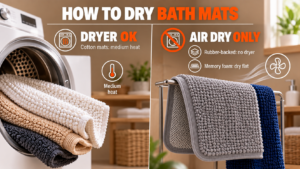
Some can. You can put cotton bath mats without a backing in the dryer on medium heat, and microfiber or chenille mats on low. Rubber-backed mats, memory foam and suction-cup tub mats should stay out, because heat cracks and warps them. If the care label says not to tumble dry, don’t.
How to Dry Bath Mats
Cotton mats go in the dryer on medium heat. A thick one takes about as long as a load of heavy bath towels and may need a second round. Microfiber and chenille can go on low heat, dried on their own, so they don’t come out covered in lint.
Rubber-backed mats and rugs need to air dry. Press out as much water as you can without twisting, then drape the mat over a rack, railing or shower rod so air can get to the backing as well as the front. Keep it away from radiators and heaters.
Whatever the mat, squeeze the thickest part before it goes back on the floor. If it feels cool or damp, give it more time. Air drying can take a few hours or more than a day, depending on the mat and how humid it is. A fan or an open window speeds things up a lot.
Why Does My Bath Mat Smell Even After Washing?
Most of the time, the mat never dried all the way. A mat left lying flat after a shower stays wet underneath for hours. Water also collects between the fabric and a rubber backing, where it can’t evaporate. And a mat that comes out of the dryer with a damp center will usually smell again within a couple of days. A bathroom with no fan makes all of this worse.
Residue is the other common cause. Too much detergent, or any fabric softener, builds up in the fibers and holds onto odors. Very old mats with broken-down fibers can keep a smell no matter how they’re washed.
Most smells go away once the mat dries properly. Hang it up after every shower, turn on the fan, and dry rubber-backed mats with the backing facing out. Use the squeeze test before putting it down. For buildup, run a stripping wash: the hottest water the label allows, a scoop of washing soda or borax added to your normal detergent, and an extra rinse. If it still smells after that, the mat is probably worn out.
Removing Mold and Mildew
Cotton mats with mildew spots can be pre-treated with detergent and washed hot. White cotton can take chlorine bleach as well if the label allows it. Rubber-backed mats need a gentler approach: soak the spots in equal parts white vinegar and water for about 30 minutes, scrub lightly and wash on a cool cycle. Once mold has spread into the backing itself, it won’t come out. Don’t use bleach on colored mats, rubber backings or microfiber.
Safety note: Never mix chlorine bleach with vinegar, ammonia or other cleaners, because the combination can release toxic gases. Rinse a vinegar-soaked mat thoroughly before it goes anywhere near bleach.
How Often Should You Replace Bath Mats?
A good bath mat lasts about two years at home, but the condition of the mat matters more than its age. It’s time for a new one when you notice any of these:
- the backing is cracking, peeling or leaving crumbs on the floor
- the mat slides when you step onto it
- a stripping wash didn’t get rid of the smell
- it takes much longer to dry, or water sits on top instead of soaking in
- the edges are frayed or the pile has gone thin
- stains or mildew no longer wash out
Mats in a busy bathroom get washed so often that they wear out sooner. There’s more on materials and wear in our guide to bath mats.
Bath Mat Care for Hotels, Spas and Other High-Use Bathrooms
Guests notice a damp or stained bath mat right away, so commercial bathrooms need a stricter routine than homes.
Most hotels and spas use heavy cotton terry mats with no backing. Nothing on them can crack or melt, so they’re washed hot and dried along with the towels. The mat should leave the room at every checkout or after every client and reach the laundry the same day. Damp linens left in a closet overnight are where mildew starts. White cotton can be washed at 160 to 180°F and dried on medium heat, around 120 to 140°F, as covered on our bleach-resistant towels page. Heavy mats often need longer in the dryer than the towels, so check the thickest part before anything gets folded.
A good rotation means a damp mat never ends up in a room. Many hotels keep three sets of bathroom linens per room: one in use, one in the laundry and one on the shelf. If your laundry goes off-site or turnovers are tight, a fourth set gives you a buffer. Ordering mats together with your wholesale towels makes it easier to keep the rotation even.
Check each mat as it’s folded, and pull any that are stained, thin or fraying before a guest sees them. Rubber-backed rugs don’t hold up well to commercial washing. If you use them, give them their own cooler process and budget for replacing them more often. For matching whites across the bathroom, our bulk hotel towels come in the same shades.
FAQ
Can you wash bath mats in the washing machine?
Most of them, yes. Just keep rubber-backed ones on a cold, gentle setting.
Can you put bath mats in the dryer?
Only if there’s no rubber backing and no memory foam. Cotton mats are fine on medium.
How do you wash bathroom rugs with rubber backing?
Cold water, a gentle cycle, mild detergent and the lowest spin your machine has. Then hang the rug to dry.
Can you wash bath mats with towels?
Cotton ones, yes. Rubber-backed, microfiber and very dirty mats should go through on their own.
How should you dry bath mats?
Cotton mats in the dryer, rubber-backed mats on a rack. Either way, make sure the middle is completely dry before the mat goes back down.
How often should you replace bath mats?
About every two years, or earlier if the backing is falling apart or the mat has stopped soaking up water.
Why does my bath mat smell after washing?
Almost always because it hasn’t dried fully, or because detergent and softener have built up in the fibers. A stripping wash usually fixes it.